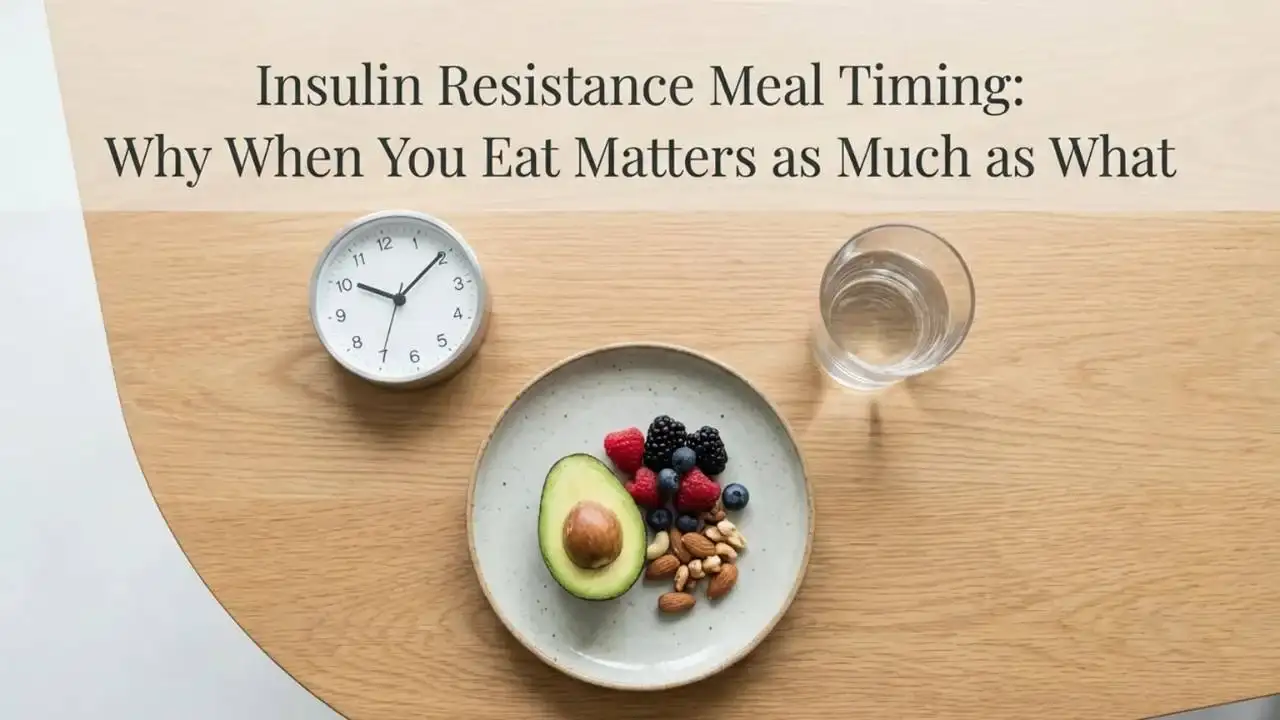
For years, the weight loss conversation has been almost entirely about what you eat. Counting calories, tracking macros, swapping ingredients. What that conversation often leaves out is something just as powerful — and a lot easier to control — than your grocery list: when you eat. For women dealing with insulin resistance, meal timing can be the difference between a plan that works and a plan that quietly fights you all day.
Dr. Allison Barbee, the Obesity Medicine physician at Sustain MD, builds meal timing into nearly every treatment plan she creates. The reason is simple: insulin does not just respond to food, it responds to the rhythm of your eating. Once you understand that rhythm, you can start using it to your advantage.
Why Timing Matters for Insulin
Every time you eat — even a small snack — your body releases insulin. That release stays elevated for a while, and only after a long enough gap does it return to baseline. If you are eating something every two hours from morning to bedtime, your insulin barely gets a chance to come down. That constant low-level elevation keeps your body in fat-storage mode and makes it harder for your cells to regain insulin sensitivity.
Spacing meals further apart gives insulin time to drop. Lower insulin between meals means your body can finally tap into stored fat for fuel and start to repair the broken signal at the cellular level. This is why two people eating the same exact meals — but on different schedules — can get very different results.
The Problem With Constant Snacking
Modern eating culture pushes constant snacking. There is always a granola bar in the bag, a coffee with creamer mid-morning, a handful of almonds in the afternoon, a few crackers before dinner. None of those feel like “meals,” but each one triggers an insulin release. By the end of the day, your pancreas has been working without a real break, and your insulin levels never had a chance to recover.
If you have ever felt like you are eating reasonably and still not making progress, this is often the hidden reason. The fix is not to eat less food — it is to eat the same amount of food in a more concentrated window.
Eating Windows and Why They Help
An eating window simply means the period of the day during which you consume your calories. If you eat breakfast at 7 a.m. and finish dinner at 9 p.m., your eating window is 14 hours long. Tightening that window — say, eating from 10 a.m. to 7 p.m. — gives your insulin levels more time to come down each day.
This is the gentle, sustainable version of what people often call intermittent fasting. It is not about extreme restriction. It is about creating space between meals so your hormones can rebalance. For many women with insulin resistance, even moving the eating window down to 10 or 11 hours produces meaningful improvements in energy, cravings, and weight.
The Best Time of Day to Eat
Research increasingly shows that humans are more insulin-sensitive earlier in the day. Your body handles carbohydrates better at lunch than it does at 9 p.m. This is partly because of your circadian rhythm — the same internal clock that tells you when to sleep also helps regulate how your hormones respond to food.
In practice, this means front-loading your eating tends to work better than back-loading it. A bigger breakfast or lunch and a lighter, earlier dinner often produces better results than the typical “skip breakfast, big late dinner” pattern that has become common.
Late-Night Eating and Why It Hits Harder
Eating late at night is one of the worst patterns for insulin sensitivity. Your body is winding down, your cells are less responsive to insulin, and the food you eat is more likely to be stored as fat than used as energy. Late-night eating also disrupts sleep quality, which itself worsens insulin resistance the next day. It becomes a quiet loop that is hard to break without changing the timing first.
If a late dinner is unavoidable, keeping it lighter, lower in refined carbs, and earlier when you can makes a meaningful difference.
A Simple Meal Timing Framework
1. Pick an eating window
Start with something achievable — a 12-hour window if you currently graze all day, or a 10-hour window if 12 already feels easy.
2. Eat real meals, not constant snacks
Aim for 2 to 3 substantial meals instead of 5 to 6 small ones. The fewer insulin releases, the better.
3. Front-load your day
Make breakfast or lunch your largest meal when possible. Your body handles food better earlier.
4. Stop eating 2 to 3 hours before bed
This protects both your insulin response and your sleep, which are deeply connected.
5. Walk after your largest meal
Movement after eating helps your muscles use the glucose without much extra insulin involved.
6. Stay consistent
Your body responds to rhythm. Eating roughly the same hours every day is more powerful than people realize.
Who Should Be Careful With Meal Timing Changes
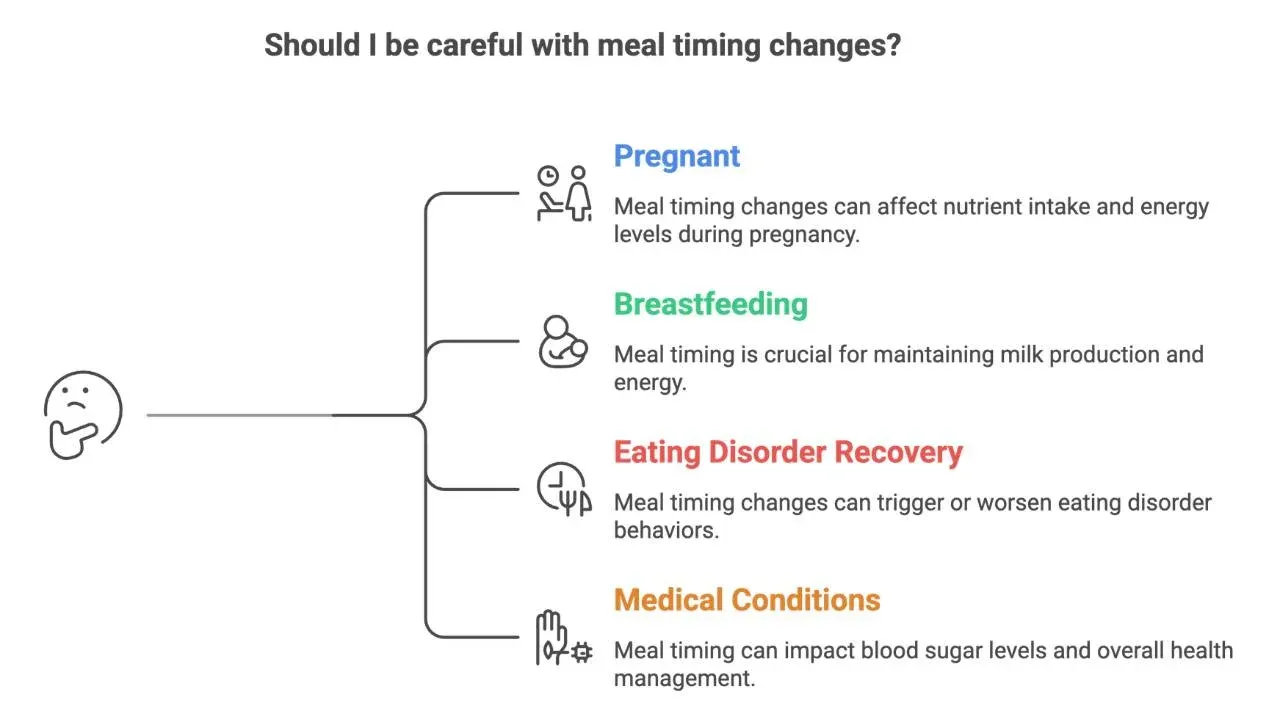
Meal timing strategies are not right for everyone. Women who are pregnant, breastfeeding, recovering from an eating disorder, or managing certain medical conditions like type 1 diabetes should always talk to their physician before making changes to when they eat. The goal is always to support your health, not to add pressure or restriction. A good physician will help you find a version of meal timing that works for your specific body and life.
The Bottom Line
If you have been focused only on what you eat, meal timing is the lever you have been missing. It is free, it does not require a new grocery list, and it works with the natural rhythm of your body instead of against it. For women with insulin resistance, it can be one of the highest-impact changes you make.
If you would like personalized guidance on building an insulin-friendly eating pattern, the team at Sustain MD — led by Dr. Allison Barbee — works with women across the country to design plans that fit real lives, not perfect ones.
Frequently Asked Questions
Is meal timing the same as intermittent fasting?
They overlap, but meal timing is broader and gentler. It focuses on rhythm and spacing, not strict fasting windows.
How long does it take to see results from changing my eating window?
Most people notice steadier energy and fewer cravings within 2 to 3 weeks. Body composition changes usually follow over a few months.
Can I have coffee in the morning if I am extending my fast?
Plain black coffee or unsweetened tea generally does not break a fast for most people. Adding milk, cream, or sugar does.
What if I get hungry between meals?
This is common at first. Drinking water, eating enough protein and fiber at meals, and staying patient through the adjustment period usually solves it.
Should I skip breakfast?
Not necessarily. For many women with insulin resistance, eating breakfast and finishing dinner earlier works better than skipping breakfast.
Can I do this if I am on medication?
You should always check with your physician first. Some medications need to be taken with food and may require adjustments.
Medical Disclaimer:
This article is for educational purposes only and is not a substitute for personalized medical advice, diagnosis, or treatment. Meal timing strategies are not appropriate for everyone, especially individuals who are pregnant, breastfeeding, have a history of disordered eating, or are managing conditions like type 1 diabetes. Always consult a qualified healthcare provider before making significant changes.