
Medical weight loss has gained more attention in recent years, especially with the rise of GLP-1 medications. While these treatments can be helpful for some people, many individuals discover that medication alone does not address the full picture of weight management.
True, sustainable progress comes from a comprehensive approach. Medical weight loss beyond GLP-1 focuses on long-term health, not just short-term results. At SustainMD, weight care is built around understanding metabolism, habits, mental health, and medical oversight to support lasting change rather than quick fixes.
Why Medications Alone Are Not Enough
GLP-1 medications can support appetite regulation and short-term weight reduction, but they are only one piece of a much larger puzzle. When used without lifestyle support, many people struggle with plateaus or weight regain over time.
Sustainable weight loss requires addressing how the body uses energy, how habits are formed, and how stress, sleep, and nutrition affect metabolism. Medical weight loss programs that focus beyond GLP-1 are designed to create lasting change, whether or not medication is part of the plan.
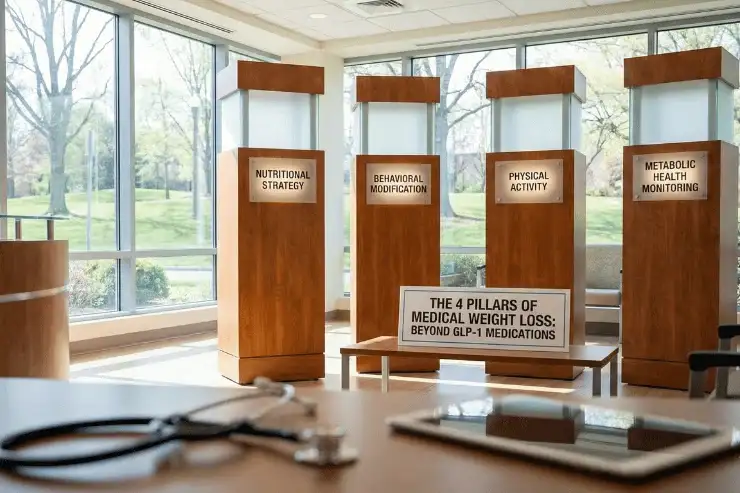
The 4 Pillars of Medical Weight Loss
A comprehensive medical weight loss program is built on four foundational pillars. Each pillar supports a different aspect of metabolic health and long-term success, working together rather than in isolation.
Pillar One: Nutrition as a Foundation
Nutrition is not about restriction or extreme dieting. In medical weight loss, nutrition counseling focuses on quality, balance, and sustainability. Medical nutrition therapy helps improve insulin sensitivity, support appetite regulation, and stabilize energy levels.
Rather than counting calories alone, this approach emphasizes food choices that support metabolic health, hormone balance, and long-term weight maintenance.
Pillar Two: Physical Activity for Metabolic Health
Physical activity plays a critical role in weight loss beyond calorie burning. Movement supports muscle mass, improves insulin sensitivity, and enhances overall metabolic function.
Exercise prescriptions in a medical setting are personalized. They focus on realistic routines that fit daily life, including strength training, low-impact movement, and consistency rather than intensity alone. This helps protect against burnout and injury while supporting long-term progress.
Pillar Three: Behavior and Mindset Support
Weight management is deeply connected to behavior, habits, and emotional patterns. Without addressing these factors, even the most effective medical treatments can fall short.
Behavioral support focuses on habit formation, emotional eating awareness, stress management, and realistic goal setting. This pillar helps people build skills that support relapse prevention and long-term weight stability.
Pillar Four: Medical Oversight and Monitoring
Medical oversight ensures that weight loss is safe, personalized, and responsive to the body’s needs. Regular monitoring allows adjustments based on metabolic markers, body composition changes, and overall health.
Medically supervised weight loss also includes evaluating whether medications such as GLP-1 receptor agonists are appropriate, helpful, or necessary. The focus remains on long-term weight management, not indefinite medication dependence.
Where GLP-1 Medications Fit Into Medical Weight Loss
GLP-1 medications like semaglutide or Wegovy can be valuable tools for some patients, particularly those with insulin resistance or significant metabolic challenges. However, they are most effective when used as part of a broader medical weight loss program.
Weight loss without GLP-1 alone is possible and appropriate for many people. Even when medications are used, long-term success depends on nutrition, movement, behavior support, and ongoing medical guidance.
A Holistic Medical Weight Loss Approach
Holistic medical weight loss treats the whole person, not just the number on the scale. This includes evaluating sleep quality, stress levels, mental health, and underlying conditions that influence weight.
At SustainMD, weight care is approached with compassion and without judgment. The goal is health optimization, improved metabolic function, and sustainable habits that support long-term well-being rather than rapid, temporary results.
Long-Term Weight Management and Maintenance
Weight loss is only one phase of the journey. Maintaining progress requires continued support, accountability, and adaptability as life circumstances change.
Medical weight loss programs that prioritize long-term weight management focus on habit reinforcement, metabolic monitoring, and ongoing lifestyle guidance. This helps reduce the risk of weight gain and supports confidence in maintaining results.
What Makes Medical Weight Loss Different From Traditional Programs
Medical weight loss differs from commercial programs because it is clinician-guided, evidence-based, and personalized. It considers body mass index, metabolic health, medical history, and individual challenges.
Doctor-guided weight loss also allows for safe integration of medications, nutrition therapy, and behavioral support when appropriate. This creates a structured yet flexible plan designed for long-term success.
When to Consider a Medical Weight Loss Program

A medical weight loss program may be appropriate if weight changes feel difficult to manage despite lifestyle efforts, if metabolic conditions such as insulin resistance are present, or if previous programs have not produced lasting results.
People seeking non-surgical weight loss options with medical supervision often benefit from a comprehensive approach that goes beyond injections alone.
Why SustainMD’s Approach Focuses Beyond GLP-1
SustainMD integrates Direct Primary Care and medical weight loss to support long-term metabolic health. Under the care of Dr. Allison Pope Barbee, MD, patients receive personalized, stigma-free support that addresses root causes rather than relying on a single intervention.
By combining lifestyle medicine, nutrition counseling, behavioral support, and medical oversight, SustainMD helps patients build sustainable weight loss plans that fit real life and evolve over time.
Conclusion
Medical weight loss beyond GLP-1 is about building a strong foundation for lasting health. While medications can play a role, they are not a complete solution on their own.
The four pillars of medical weight loss nutrition, physical activity, behavior support, and medical oversight work together to support sustainable progress. With a comprehensive, doctor-guided approach, long-term weight management becomes achievable and maintainable.
Frequently Asked Questions
Are GLP-1 medications enough for long-term weight loss?
Medications can help, but long-term success usually requires lifestyle and behavioral support.
What is included in a medical weight loss program?
Programs typically include nutrition guidance, activity planning, behavior support, and medical monitoring.
Can you lose weight without GLP-1 medications?
Yes, many people achieve sustainable weight loss through lifestyle-based, medically supervised programs.
What happens after stopping GLP-1 medication?
Without lifestyle support, weight regain is possible. Long-term planning helps maintain results.
How do doctors support weight maintenance?
Ongoing monitoring, habit reinforcement, and metabolic evaluation support long-term success.
Medical Disclaimer
This content is for educational purposes only and is not intended to diagnose, treat, or replace medical advice. Always consult a qualified healthcare provider before starting or changing any weight loss program or medication.